

| Contact Us |
| Name:colin |
| Email:colin@xhhjtech.com |
| T e l:+86 18602602237 |
With The Same Powder Production Line, Why Does Someone Else Run for Three Years Without Trouble, While Yours Has Problems Everywhere in Six Months?
In the powder processing industry, buying equipment is only the starting point. What really creates the gap is how the equipment is used and maintained every day. The same production line, the same brand of equipment, however the operating condition in different factories can differ tenfold. Below is a comparison across four areas to see where the gap really lies.
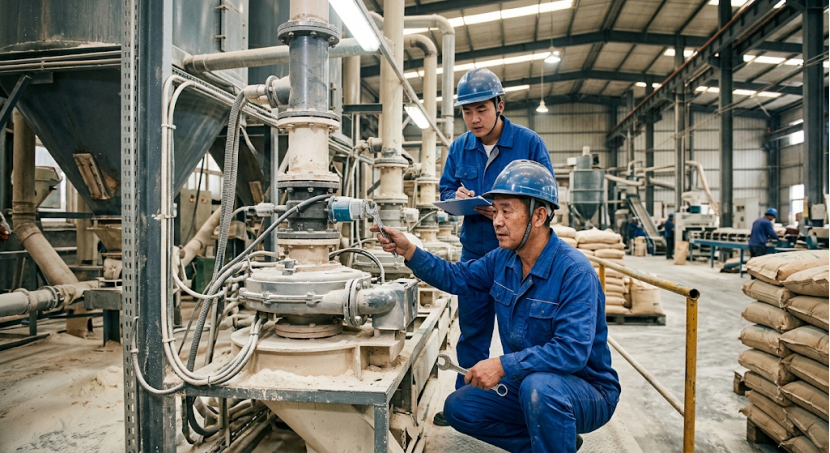
Comparison 1: Pre-Startup Checks
In factories with stable operations, operators spend ten minutes before startup every day doing required checks. They check air supply pressure, confirm seal condition, listen to fan noise and read the pressure gauge. These actionsmight look simple, but sticking to them kills most faults in the early stage. In factories with frequent problems, the operator just presses the start button. As long as the equipment turns, they think it is fine. They only check the cause after the alarm light comes on. The first is active prevention, the second is passive firefighting. Equipment life under these two modes is naturally different.
Comparison 2: How Abnormalities Are Handled
When equipment shows an abnormality, a stable factory traces it to the root. Why is the filter clogged? Is it water in the air supply or has the material changed? Should the reverse-blow parameters be adjusted? Find the cause first, then act. In factories with frequent problems, the operator's first reaction is to reset and restart. The alarm clears, so they keep running. The same problem repeats until the equipment breaks down completely. The first treats every abnormality as a chance to improve. The second treats every abnormality as "bad luck".
Comparison 3: Spare Parts Management
In factories with stable operations, wearing parts like filters, seals and gloves have fixed replacement cycles and spare parts stock. They replace them when the time comes, not when problems appear. In factories with frequent problems, people only think about buying spares after they run out. During the purchasing period, the equipment runs while still faulty and small problems turn into major failures. Spare parts management is not a warehouse issue. It is part of production continuity management.
Comparison 4: Operation Records
Stable factories record current, pressure difference, output and abnormal events every shift. Over time, the data shows trends. A slowly rising current means the hammers are wearing. A slowly rising pressure difference means the filter is clogging. Factories with frequent problems keep no records at all. When a problem appears, they can only guess. Maintenance without data support is like a blind man feeling an elephant.
Add up the gaps across these four areas, and you understand the gap between three years and six months. The equipment is the same. Whether it is used well or not all comes down to the details.


