

| Contact Us |
| Name:colin |
| Email:colin@xhhjtech.com |
| T e l:+86 18602602237 |
Vacuum Lifter Suddenly Drops a Load? It's Not That the Suction Pad Failed But The Vacuum Level Had Been Warning You All Along
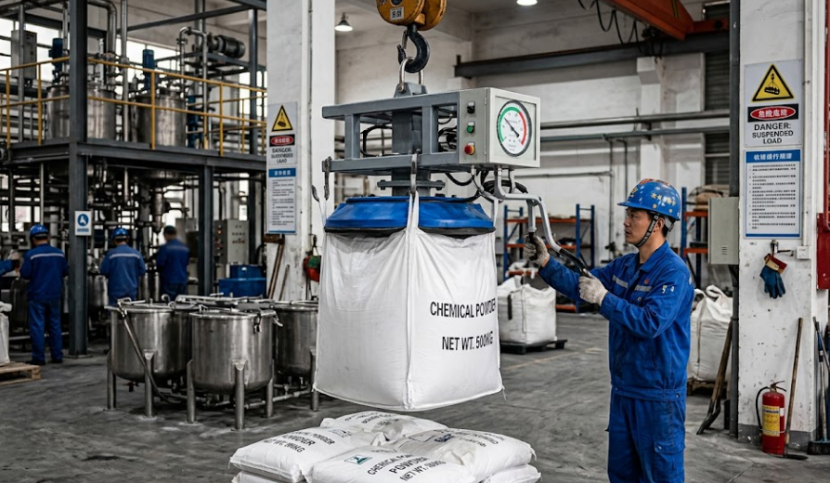
A vacuum lifter uses suction generated by negative pressure to lift and move bags, drums or sheets. In powder processing plants, it's often used for handling bulk bags and is an invaluable tool for drastically reducing manual labor. However, if suction suddenly weakens or the load drops mid-air during operation, the consequences go beyond lost material, they can include serious injury to personnel.
I. Three Common Causes of Insufficient Suction
Behind every suction failure is usually oneor a combinationof three issues: worn seals on the suction pad causing air leaks, loose connections in the vacuum lines or clogged filter elements in the vacuum generator or vacuum pump. None of these problems happen overnight; they deteriorate gradually over time. If you don't make it a habit to monitor vacuum level daily, by the time the problem becomes obvious, you're already in critical condition.
II. Two Checks Before Each Use
Perform a no-load test before each use: start the vacuum pump and check that the vacuum gauge reading meets the equipment's required value. Then use a flat plastic or metal plate to test the suction pad's gripping ability, confirm that the pad holds firmly and releases quickly when the button is pressed. Only then should you start the actual lifting operation. If you notice the vacuum level continuously dropping during a lift, lower the load to a safe position on the ground immediately. Do not try to "beat the clock" and rush it to the destination.
III. One Easy-to-Overlook Daily Maintenance Task
The vacuum reservoir on the lifter will accumulate small amounts of dust and moisture over time. It should be drained regularly; otherwise, the effective volume keeps shrinking, and the lifter won't be able to maintain enough holding pressure in the event of an unexpected power outage. This simple daily routine may seem minor, but it can be a lifesaver when it really counts.


