

| Contact Us |
| Name:colin |
| Email:colin@xhhjtech.com |
| T e l:+86 18602602237 |
Zero Contact with Highly Active Drugs: How Isolation Feeding Stations Build a Safety Wall
When handling antibiotics, hormones or highly sensitizing raw materials, operator safety and product purity are equally important. Traditional open feeding carries high risks. Isolationfeeding stations use physical barrier technology to redefine the standard of "separation between people and drugs." This article explains how they enable safe, leak-proof feeding of high-risk materials in a closed environment.
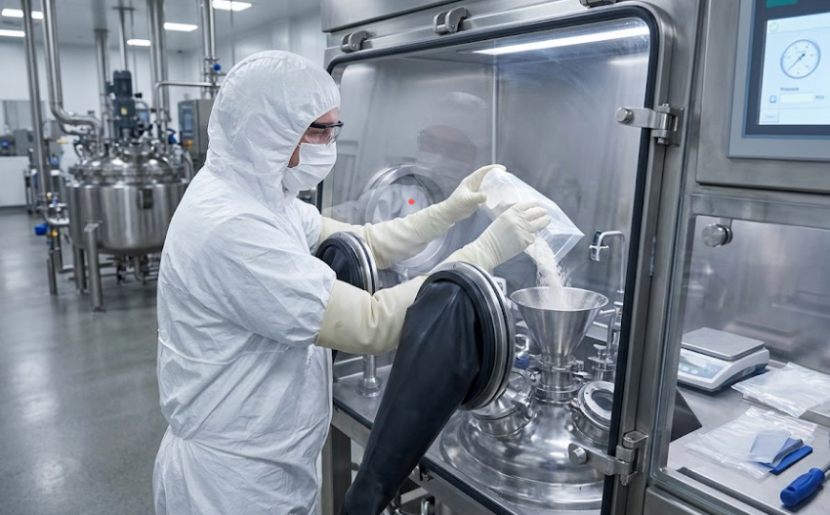
1. Core Advantage: Double Protection from a Negative-Pressure Glove Box
This equipment uses closed glove-box operation, based on two key points:
Active operator protection: Operators open bags and pour materials through long-arm gloves built into the box. During the whole process, skin and breathing zones have zero contact. The internal negative pressure ensures that even if gloves are damaged, airflow moves from outside to inside, preventing dust escape.
Self-circulating dust collection: Traditional dust removal blows dust away. This unit uses an integrated dust collector to capture dust and feed it directly into the reactor below. This avoids material loss and prevents secondary pollution from changing collection bags.
2. What Can Cause Leakage Risks?
These three details are often overlooked but can directly break isolation:
Glove integrity failure: Gloves age from frequent stretching and UV disinfection, developing tiny cracks that are hard to see. This is a major exposure risk. Always perform a pressure hold test before use.
Positive pressure imbalance:Excessive nitrogen or compressed air used for cleaning or sealing can raise internal pressure above outside pressure, pushing toxic dust out through gaps.
Residue inside the box:If material gets damp and clogs the outlet, poor flow may cause operators to tap the gloves repeatedly, increasing the chance of glove damage.
3.Emergency Procedure if Equipment Stops
If the unit suddenly stops (e.g., air supply cut off), operators should keep both hands still and wait for the backup electric valve to start emergency venting. Do not force open the front door before material is emptied. The correct action is to open the inflatable seal and let gravity help discharge the material.


