

| Contact Us |
| Name:colin |
| Email:colin@xhhjtech.com |
| T e l:+86 18602602237 |
Not Conveying? Try These 7 Checks Before You Dismantle
The vacuum conveyor is one of the most common devices in powder conveying. But the more common the equipment, the easier it is to panic when it fails. Many operators instinctively disassemble pipes or change filters as soon as they see "no material flow," only to find after hours that a small valve was simply left closed. In fact, there is a logical pattern to vacuum conveyor failures. By following these seven steps from simple to complex, most problems can be identified within ten minutes.
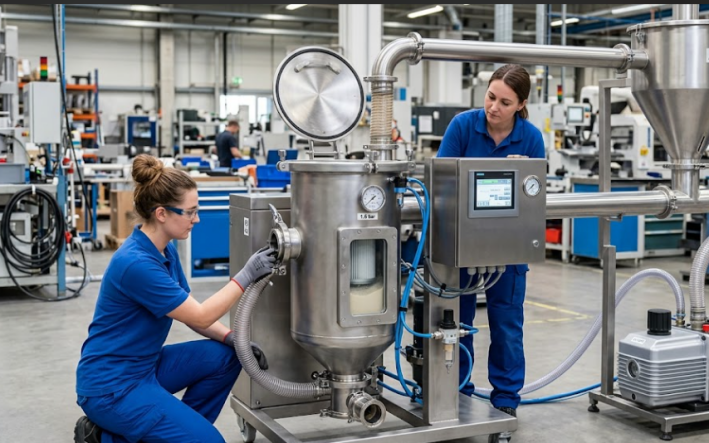
Step 1: Check compressed air
Make sure the main compressed air valve is open and the pressure is stable within the range required by the equipment. Pneumatic valves and the blow-back system will not operate without enough air pressure. This is the most easily overlooked cause.
Step 2: Check sealing
Check that the hopper door and quick-connect pipe joints are properly sealed. Even small air leaks can prevent vacuum from building up. A quick way to check is to place your hand near the connections and feel for suction.
Step 3: Check the blow-back system
Observe whether the blow-back system is working properly. Clogged filters are the most common failure source. If the blow-back frequency is too low or if the compressed air contains water or oil that clogs the filter, suction will drop sharply.
Step 4: Check the inner pipe wall
Check the inner wall of the conveying hose for material buildup. This is especially important when handling hygroscopic materials, as a "wall layer" can form and gradually reduce the effective pipe diameter.
Step 5: Check the vacuum pump
Check the operating condition of the vacuum pump or blower. Confirm that the motor rotation direction is correct and listen for any unusual noise.
Step 6: Check the three-way valve
Check whether the rubber valve plate of the pneumatic three-way valve is worn or cracked. A leaking valve plate will directly cause vacuum loss.
Step 7: Reboot the PLC system
If all the above are normal, consider whether the PLC control system has frozen due to electromagnetic interference. Try a power cycle to restore normal operation.


