

| Contact Us |
| Name:colin |
| Email:colin@xhhjtech.com |
| T e l:+86 18602602237 |
Causes and Troubleshooting for Vacuum Conveyor Not Sucking Material
The vacuum conveyor uses a vacuum pump to generate negative pressure and transports materials through sealed piping. If the equipment fails to suck material, follow these steps for troubleshooting:
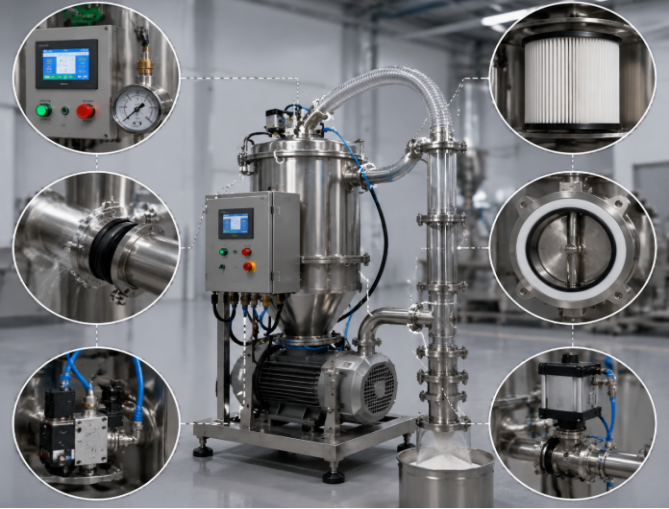
Step 1:Check the power source. Start the vacuum pump via the touchscreen manual test interface, and observe the vacuum gauge reading and airflow at the pressure relief port to verify whether vacuum level and airflow meet requirements. If the vacuum reading is higher than normal, it typically indicates a blockage in the conveying line. If lower than normal, there is an air leak in the system.
Step 2:Inspect pipeline sealing. After starting the equipment, first check whether suction exists at the inlet. If no suction is felt, inspect for material blockage. If suction is weak, check whether the filter element is clogged or if there are air leaks in the piping.
Step 3:Check the butterfly valve sealing ring. As a moving component of the conveyor, the butterfly valve is subject to wear over time. A worn sealing ring will cause a drop in vacuum level, resulting in slow material suction or complete failure to suck. Open the conveyor cover, inspect the sealing ring, and replace it promptly if wear is found.
Step 4:Verify the operation of all components. Based on the working principle of the equipment, confirm that each butterfly valve operates correctly and check whether the compressed air pressure is sufficient. Although rare, excessive impurities in the compressed air may damage solenoid valves and cylinders, so this should also be considered.
The above covers the common causes and troubleshooting steps for a vacuum conveyor failing to suck material. Should issues persist, please contact our service hotline and our professional team will assist you in detail.


