

| Contact Us |
| Name:colin |
| Email:colin@xhhjtech.com |
| T e l:+86 18602602237 |
Bulk Bag Packaging System: How Heavy Materials Get Packaged Efficiently
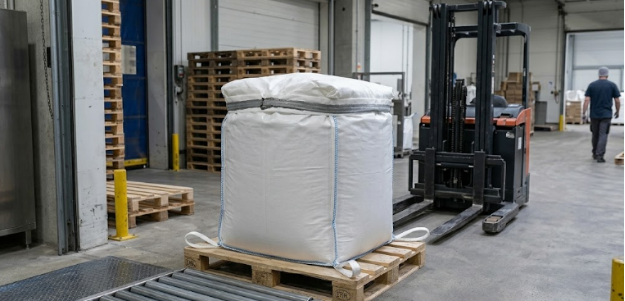
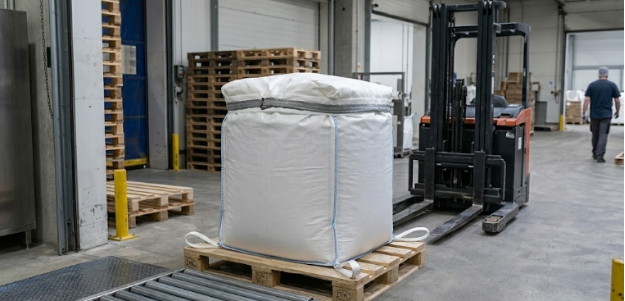
Have you ever seen those large, woven bags that hold a ton of sand, fertilizer or plastic pellets? They are called bulk bags. But have you ever wondered how those heavy bags get filled in the first place?
That job belongs to the bulk bag packaging system.
So, What Is a Bulk Bag Packaging System?
A bulk bag packaging system is a machine that automatically fills large bagswith powder, granules or flakes. Think of it as a giant, heavy-duty funnelcombined with ascale and a dust control system.
It is commonly found in factories that produce cement, chemical powders, animal feed, fertilizer, plastic resinsor food ingredients like flour and sugar.
How Does It Work?
The system has four main steps:
Bag Hanging: An empty bulk bag is hung from four hooks or clamps attached to the machine's frame. The bag's open top is positioned directly under the filling spout.
Automatic Filling: The machine opens the filling spoutand material flows down into the bag. A built-in scale continuously weighs the bag. When the preset weight is reached, the machine automatically stops the flow.
Dust Control : As the bag fills, dust can escape from the bag's top. The system uses a dust collection port connected to a vacuum or filter. This captures almost all airborne dust, keeping the work area clean and safe.
Bag Release : After filling is completed, the machine can automatically remove the dust from the bag opening, and then transport the filled bags out of the filling station through a roller conveyor. The operator seals the bag and moves it away.
Where You Will Find Bulk Bag Packaging Systems
Bulk bag packaging systems are used across many industries that handle powder, granulesor flakes.
Chemical Industry: For filling plastic resins, pigments and rubber additives. Dust control is critical here because many chemical powders are hazardous.
Construction Industry: For bagging cement, dry mortar, sand, gypsum and lime. Construction sites prefer one-ton bulk bags because they are easy to move with a forklift.
Agriculture: For bagging animal feed, grain, seeds and fertilizer. Farms need speed and accuracy to keep up with high demand.
Food Industry: For packaging flour, sugar, starch and milk powder. Food-grade systems use stainless steel and meet strict sanitation standards.
Mining & Minerals: For bagging silica sand, clay, calcium carbonateand talc. These heavy, abrasive materials require tough equipment.
Other Industries: Including recycling plants, water treatment facilities and specialty chemical plants.
Why Use a Bulk Bag Packaging System?
Without this machine, workers would have to fill large bags manually—holding the bag open under a chute, guessing the weightand breathing in dust. That is slow, inaccurate, and unhealthy.
Let's Sum It Up
The bulk bag packaging system is not a complicated machine. It is essentially a controlled filling station with a scale and a dust collector. But it solves a very real problem: how to quickly, accurately, and cleanly fill huge bags with heavy materials—without breaking your back or making a dusty mess.
Next time you see a big woven bag of sand at a construction site or a bag of fertilizer at a farm supply store, you will knowa bulk bag packaging system probably filled it.


