
API Automatic Conveying Line


Overview:
This line is designed for API production, using closed conveying technology to achieve automated material transfer and connection between production processes.The system combines a bulk bag discharge station and a dust-free feeding station to solve large-volume raw material feeding challenges. Raw materials are conveyed under positive pressure with nitrogen drive protection, addressing moisture prevention, oxidation resistance, and explosion-proof requirements for sensitive materials. Wet materials are transferred through closed pipes, avoiding exposure risks from manual handling and ensuring material quality. The entire line is controlled automatically to improve production efficiency and is suitable for pharmaceutical, chemical, material and food industries.
Core Advantages
The combination of bulk bag discharge station and dust-free feeding station solves large-volume raw material feeding problems, saving 3% of material and reducing manpower by 20%.
Positive pressure conveying with nitrogen drive protection addresses moisture prevention, oxidation resistance, and explosion-proof risks for sensitive materials, reducing production risks by 20%.
Closed pipe conveying for wet materials avoids manual handling exposure risks and protects material quality, reducing safety risks by 30%.
Automatic control improves production efficiency by 30%.
Product Features
This line features closed conveying technology for automated material transfer, combined bulk bag and dust-free feeding stations for large-volume feeding, positive pressure nitrogen-driven conveying for sensitive material protection, closed pipe transfer for wet materials and fully automatic control system.
Product Applications
Designed for API production, this line is suitable for pharmaceutical, chemical, material and food industries to achieve safe, closed and automated material conveying between production processes.
Precautions
Install the line on a stable surface. Ensure all sealing points remain intact during operation. Regularly inspect the nitrogen pressure system and conveying pipes. Clean the feeding stations frequently. Disconnect power and nitrogen supply before maintenance. Follow standard cleaning procedures when switching between different materials.
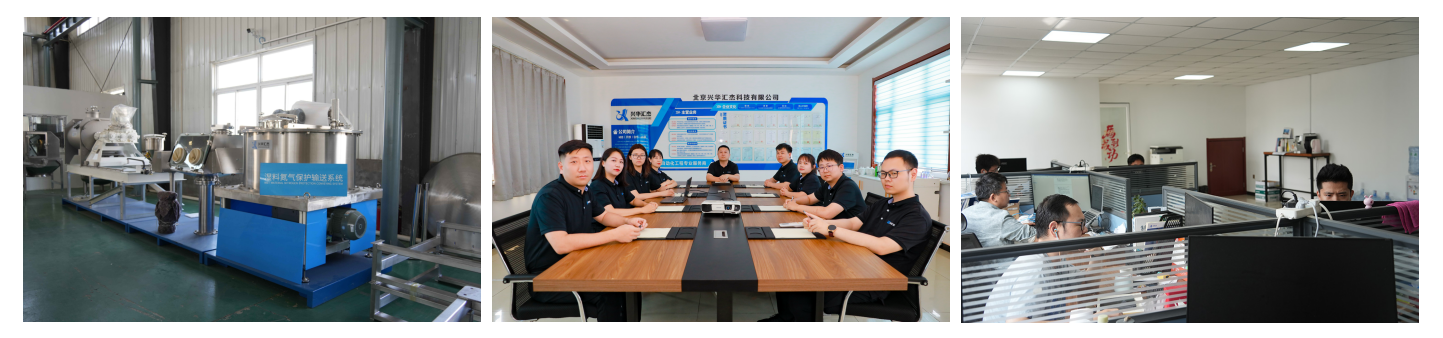
Picture of Factory
Why Choose Us
1. Engineering depth
Layouts are checked against your P&ID and hazard study to align
interfaces, venting, and access platforms with site standards.
2. Manufacturing traceability
Material certificates and weld maps can be bundled for FAT
documentation, supporting audit-ready pharmaceutical projects.
3. Lifecycle support
Spare parts kits, on-site commissioning, and remote guidance
shorten startup time and keep feeding performance stable.

FAQ
Q: What is the purpose of using nitrogen drive in the conveying system?
A: Nitrogen drive creates a protective environment during positive pressure conveying, which helps prevent moisture absorption, oxidation and potential explosion hazards for sensitive raw materials.
Q: How does the line reduce material waste during feeding?
A: By combining a bulk bag discharge station and a dust-free feeding station, the line minimizes spillage and dust loss, resulting in approximately 3% material savings.
Q: Is the system suitable for wet material transfer?
A: Yes. Wet materials are transferred through sealed pipes, which eliminates manual handling and reduces the risk of exposure or contamination during transport.
信息收集
NAME*
*Email*
*WhatsApp*
*Subject & your message*
*


